

🚨 Source Information
Source: Staten Island Advance
Publisher: https://www.silive.com
Published: April 20, 2026 at 3:19 PM
Article URL: Read Full Article
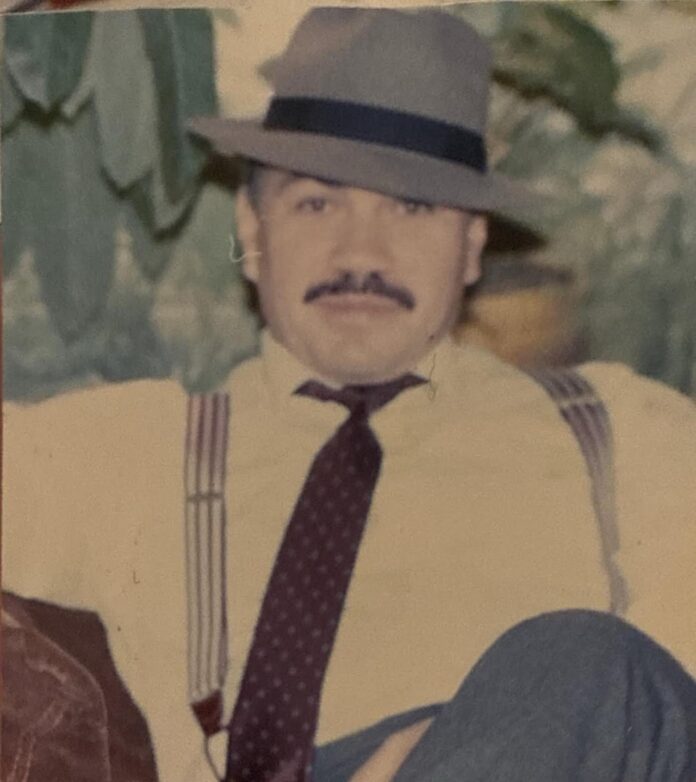
STATEN ISLAND, N.Y. — When John Edgardo Aponte was a boy, he sang in a doowop group.
“He took the harmonizing skills he learned in his youth when he was in the doowop group and applied that throughout his life,” said his daughter, Jasmine Basil. “When you are in a singing group you have to find the harmony of your voice in relation to the other voices. Sometimes you’re the lead and sometimes you step aside to let another voice come through. You always look to create harmony. That skill of creating and finding harmony is what he did all his life with his colleagues, mentees, students, clients, friends and family.”
Aponte, a New Springville resident, police officer, psychologist, and trailblazer in the field of domestic abuse treatment, died on April 2. He was 78 years old. The cause of death was complications related to Parkinson’s disease.
He was born in Ponce, Puerto Rico on August 8, 1947. His family relocated to the Bronx when he was a young child. His parents, who had two other children, had a business: they sold snow cones, using homemade syrup, out of food trucks. His father had been a renowned boxer in Puerto Rico.
As a boy, Aponte loved to sing doowop and salsa. He played handball. He dreamed of becoming a surgeon. After graduating from DeWitt Clinton High School, he joined the NYPD. “He was assigned to patrol in the South Bronx in community relations, as a youth aid officer and with gang intelligence,’” said his wife, Paula Calby.
Aponte wanted to become a psychologist. “He really had a burning desire to help people,” Calby said.
He studied psychology at Herbert H. Lehman College, got a master’s degree in community psychology from New York University, and got his doctorate in clinical psychology from Long Island University.
In 1974, Aponte became an adjunct professor at John Jay College of Criminal Justice. He was an instructor and a lecturer; he provided counseling to students.
He became a staff psychologist in the Psychological Services Unit of the NYPD in 1978. “He worked on recruitment, he interviewed applicants to find their suitability to work in a police department,” Calby said. “He conducted interviews with prospective candidates. He would determine if they fit the criteria to become a police officer from a psychological perspective.”
He first met his wife when she was applying to join the police force. In 1982, he relocated to New Springville.
From 1983 to 1995, Aponte worked at Victim Services (now called Safe Horizon). “He was a pioneer in the struggle to end domestic violence in New York City,” Calby said.
“He started the batterer’s intervention program there,” said his colleague, Quentin Walcott. “He’s one of the foremost in the field of domestic violence and batterers intervention. He ran intervention groups for men who have committed domestic violence in their relationship, so they were either physically, verbally, financially or spiritually abusive in their relationships. They were taken to court, for either violating an order of protection or committing some type of crime, and were ordered from the court to go to these batterers and prevention programs.”
“My father wanted to understand why the batterer was a batterer; to understand the origins of that was groundbreaking,” Basil said. “Because of that, he changed a lot of lives for the better. That’s part of his legacy.”
“He was one of the main people in the city who trained other facilitators to run those type of groups,” Walcott said. “He trained hundreds of people on a particular curriculum to actually go out in our own respective communities and run those type of groups.”
“John trained me in the area of intimate partner violence, many years ago, and with a focus on working with men who harm their female partners. He trained a considerable amount of practitioners to do the work, and many of us are still in the field,” said his colleague, Dr. Samuel Aymer. “As a result, that knowledge has been transmitted and continue to be transmitted.”
“What happened when you were being taught by John, not only did it make our practice better, but it made us better people,” said his colleague, Pamela Edstrom. “That was something that he demanded of us. He demanded that we do a lot of introspection and be honest with ourselves, be accepting of who we are and be accepting of the people that we worked with.”
“He helped social workers, he helped psychologists, he helped families, he helped people who hurt people,” Edstrom said. “He helped everybody.”
“He was brilliant,” Walcott said. “He dealt with a serious subject, but in a humorous way. He would always tell a story or give anecdotes. He was very strategic and very logical.”
In his free time, Aponte practiced Tai Chi. He rode his bicycle around the five boroughs, and later his motorcycle. He loved movies and was a voracious reader.
“He was athletic, he was an intellectual, he had a phenomenal sense of humor,” Basil said. “He was a very giving person.”
“As an advocate for people with Parkinson’s, he was wonderful,” Calby said. “He was a fighter. He went from using a cane, then a walker, and then the wheelchair. And through it all, he never lost his zest for life. He never lost his compassion for others. He always helped people.”
“My dad gave me a great amount of confidence,” Basil said. “He taught me how to use my voice and to always trust my voice. He was my first hero. He always made me feel like I could do anything.”
Aponte is survived by his wife, Paula Calby, his children, Jasmine Basil and John Paul Aponte, his brother, Dixon Aponte, and his sister, Vivian Harris.

